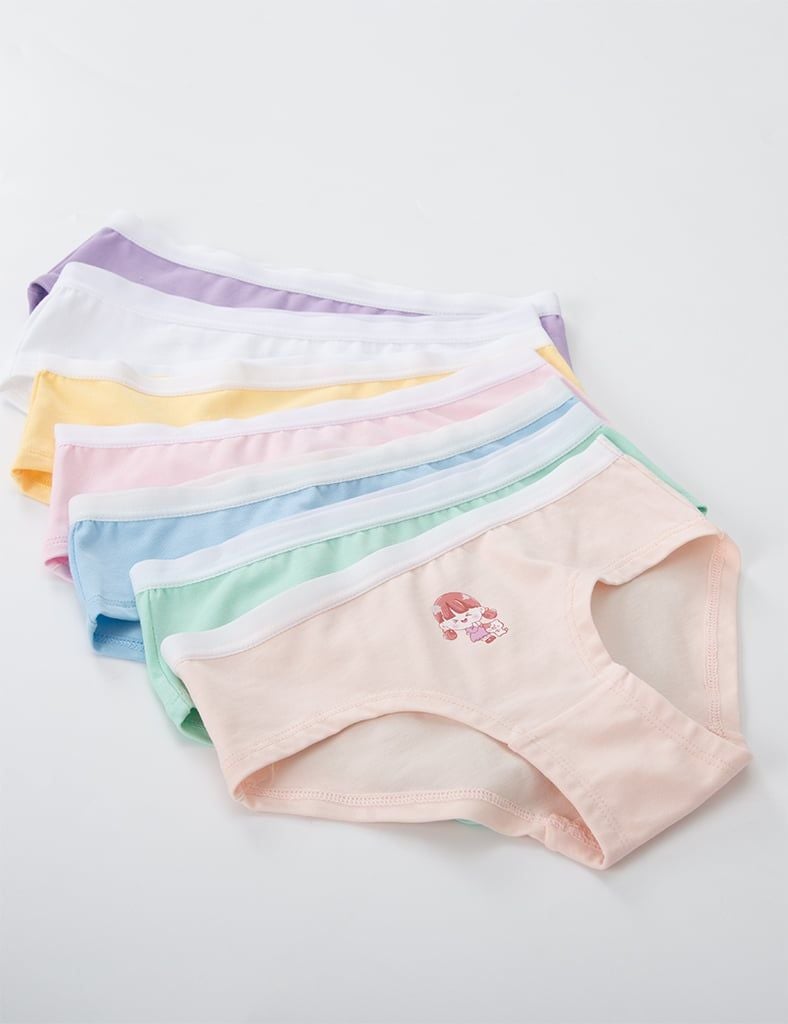
The gusset is the small extra panel of fabric sewn into the crotch of girls underwear, and it is the one part that touches the most sensitive skin all day long. Most buying guides stop at prints, sizes and price. This one looks closely at the panel that actually decides whether your daughter is comfortable at school or fidgeting by lunchtime.
At iBasic we have spent years cutting and sewing this exact detail, so here is what to look for before the next pack goes in the basket.
1. What is a gusset in girls underwear, and what does it do?
A gusset is a separate piece of fabric, almost always cotton, stitched into the crotch of a pair of underwear. It is not a seam and not a lining for the whole garment.
It is one small panel with three jobs: absorb moisture, let air through, and stop rough seams from rubbing sensitive skin.
Open any well-made pair and turn it inside out. You will see a soft rectangle or oval sitting along the crotch, sewn on at both ends. On a good pair it is doubled, meaning two layers of the same cotton laid together, which is why the area looks slightly thicker and paler than the rest of the fabric.

Why a separate panel at all? Because the body of the underwear and the part that sits against the body have different jobs.
The outer body can be modal, bamboo or a cotton blend with a little spandex so the garment stretches and holds its shape.
The crotch cannot afford that stretch fibre. Spandex and polyester hold heat and hold moisture, and neither is what you want against a child's skin for eight hours.
The gusset is how a manufacturer solves both problems at once. Stretch and shape on the outside, plain breathable cotton where it matters.
Summary table: three gusset types and what each one means for your daughter
| Gusset type | What you see inside out | What it means in real wear |
| Double-layer 100% cotton | Two soft cotton layers, ends stitched down flat | Absorbs well, dries fast, the standard to look for |
| Single-layer sewn-in panel | One thin cotton layer, visible stitching | Acceptable for younger, lighter wear, wears out sooner |
| No true gusset | Fabric runs straight through, no separate panel | Whatever the outer fabric is, it sits on the skin all day |
That third row is the one to watch. Cheap multi-packs often skip the gusset entirely and simply print a cotton claim on the tag while the crotch is the same polyester blend as the rest.
2. Why does the gusset matter more for a growing girl?
For girls, the crotch of a pair of underwear is a warm, closed, often damp area, and the wrong fabric there is the single most common cause of itching and redness that parents mistake for an allergy.
A breathable cotton gusset keeps that area drier, which keeps skin calm.
Think about a normal school day. Your daughter puts underwear on at seven in the morning and it stays on until the evening bath.
In between there is PE, running at break time, a hot classroom and a long bus ride. Moisture builds up. If the fabric holding that moisture is polyester, it does not absorb, it just traps, and the skin stays wet against a warm synthetic surface.

That is the environment where irritation starts. Redness at the leg openings, a child scratching or squirming, complaints that "it feels itchy" with nothing visible to see. Nine times out of ten the cause is fabric and fit, not a medical problem.
The stakes change again from roughly age nine. As puberty begins, normal discharge starts, sometimes a year or more before a first period. Suddenly the gusset is doing real absorbing work every single day.
A thin synthetic crotch at that stage means damp underwear by mid-afternoon, and a girl who is already self-conscious about her changing body now has a comfort problem she may not want to talk about.
3. How to check the gusset in girls underwear: 5 quick tests
3.1. Turn it inside out and look for a separate panel
Flip the underwear inside out and look at the crotch. You should see a distinct panel with its own stitching at both ends, in a slightly different shade from the body fabric. If the fabric simply runs through with no panel, there is no gusset, whatever the packaging says.
Do this in the shop, or ask for an inside-out photo when buying online. A brand that builds a proper gusset is usually happy to show it.
3.2. Check the fabric label for cotton on the panel itself
Read the composition tag carefully. Many tags say something like "body 95% cotton, 5% spandex, gusset 100% cotton". That second half is the part that matters, and its absence is telling.
A whole-garment claim of "cotton rich" tells you nothing about the crotch. If the tag does not mention the gusset separately, assume the crotch is the same blend as everything else.
3.3. Feel for flat, soft seams around the edges
Run your thumb along the edge where the gusset meets the body. It should feel flat and smooth. A raised, ridged or scratchy seam is exactly the kind of thing that rubs during PE and leaves a red line.
Flatlock stitching is the term for the good version. You can recognise it by eye: the seam lies level with the fabric rather than standing up from it.

3.4. Measure the panel, not just the size on the tag
Two pairs in the same size can have very different gussets. Lay the pair flat and look at the panel length. On a school-age pair it should run the full crotch, not sit as a token square in the middle.
A short gusset is a cost saving, and it shows up as a damp patch outside the panel by the end of the day. Compare two brands side by side once and the difference is obvious.
3.5. Stretch it gently and watch it recover
Hold the gusset area and stretch it lightly across. Good doubled cotton gives a little, then springs back with no wrinkling or gaping. Fabric that stays stretched or shows the layers separating will lose its shape after a handful of washes.
This is also the fastest way to judge a pair after a few months of wear, which brings us to the next question.
4. When should you replace a pair because the gusset is worn out?
Replace a pair when the gusset thins, pills, stiffens or stays stained after washing, regardless of how the rest of the garment looks.
The outer fabric usually survives far longer than the panel doing the daily work, so the crotch is the honest indicator of a pair's real age.
Comparison: what you see versus what to do
| What you see on the gusset | What it means | Replace now? |
| Fabric thinner when held to light | Cotton fibres worn through | Yes |
| Pilling, small rough bobbles | Friction damage, will irritate skin | Yes |
| Stains that survive washing | Fibres saturated, no longer absorbing | Yes |
| Edges curling or stitching loose | Seam failing, will rub | Yes |
| Slight fading, panel still soft and thick | Normal colour loss | No, keep wearing |
As a rhythm, plan on refreshing the everyday rotation about every six months for ages 2 to 8, and every four to six months from age nine, when daily absorbing work speeds up the wear. Growth spurts often force the decision before the calendar does.
You may also like:
Questions moms often ask:
1. Do all girls underwear have a gusset?
No. Most reputable brands include one, but budget multi-packs frequently skip it and run the outer fabric straight through the crotch.
Since it costs nothing to check, turn one pair inside out before you commit to a whole pack.
2. Is a cotton gusset enough if the rest of the pair is polyester?
It helps a great deal, because the cotton panel handles the area that matters most. Still, a fully synthetic body holds heat around the hips and thighs, so comfort will be noticeably lower on a hot day.
3. Why does my daughter still itch even in cotton underwear?
Usually one of three things: a pair that is a size too small so the leg openings dig in, detergent or fabric softener residue left in the cotton, or underwear that has simply worn out.
4. At what age does the gusset start to really matter?
It matters from the very first pair, but it becomes critical around age nine to eleven, when normal discharge begins and the panel starts absorbing every day.
That is the moment to move from thin toddler-style pairs to underwear with a full-length, double-layer cotton gusset, and to keep a few more pairs in the rotation.
5. Can I patch or sew a worn gusset instead of replacing the pair?
We would not recommend it. A hand-sewn repair adds a seam right where the skin is most sensitive, and worn cotton around the patch will fail next anyway.
6. How many pairs should we keep in rotation?
Around fourteen to twenty pairs for a school-age girl, which is roughly two weeks of wear. That is enough to survive a slow laundry week, and it also spreads the wear so no single pair is washed to death.
A message for mom:
The gusset is the smallest part of girls underwear and the part that does the most work, so it deserves the minute it takes to check. Turn the pair inside out, read the tag, feel the seam, and you will already be buying better than most.
If you would like a starting point, the girls underwear range from iBasic is built around a full-length double-layer cotton gusset and flatlock seams, so you can browse knowing that detail is already handled.