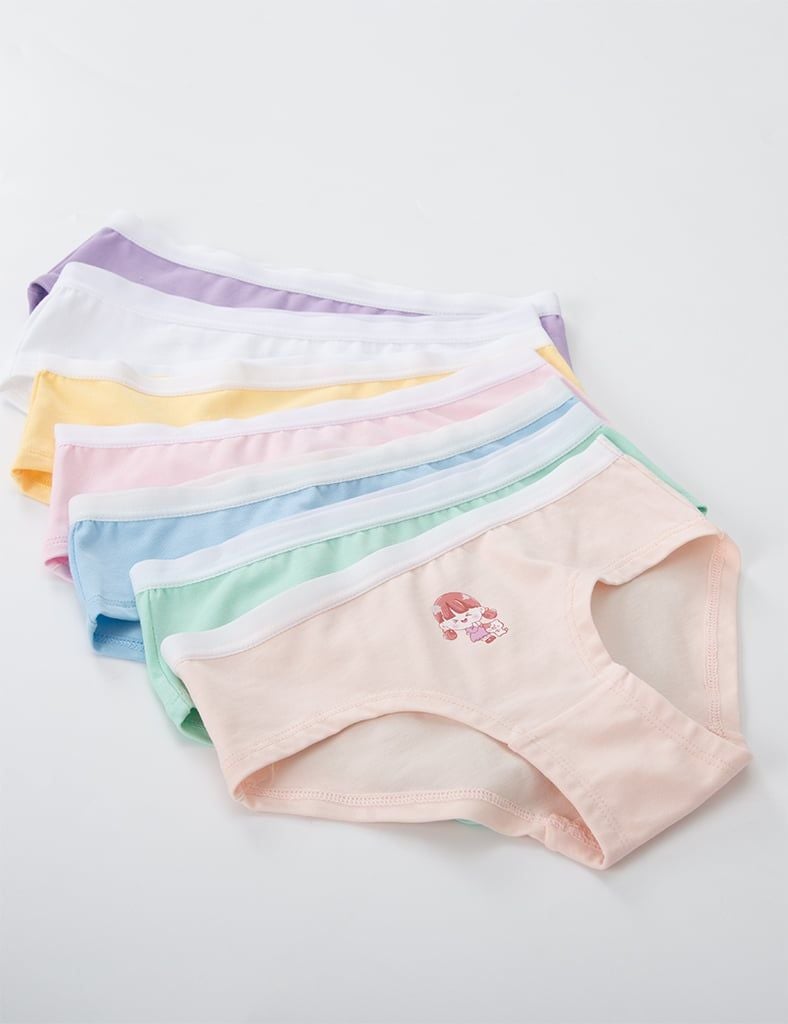
Good boys sleepwear is decided by three things, in this order: fabric, fit, and the age stage your son is actually in. Print and price come last, even though they are what most of us look at first.
In this guide iBasic breaks the choice down for hot, humid nights and air-conditioned rooms, with a sizing rule that survives a growth spurt. Most sets fail on one small detail, and it only shows up after a few washes.
1. What makes boys sleepwear actually good for sleep?
A sleepwear set is good when it lets body heat escape faster than your son produces it. Children run warmer than adults and sweat more per kilo of body weight, so breathability and sweat absorption matter more than thickness, softness on the shelf, or how cute the print looks in the photo.
Everything else follows from that. A boy who overheats at 1am will kick off the blanket, wake up, and be groggy at school the next morning. The fabric on his skin is the one variable a mom fully controls.
1.1. Why does fabric matter more than style for a boy who sweats at night?
Fabric decides whether sweat sits on the skin or moves away from it. Cotton absorbs moisture but holds it; bamboo and modal move it outward and dry faster.
A boy in the wrong fabric wakes up damp and cold even in a warm room, which is the most common hidden cause of restless nights.
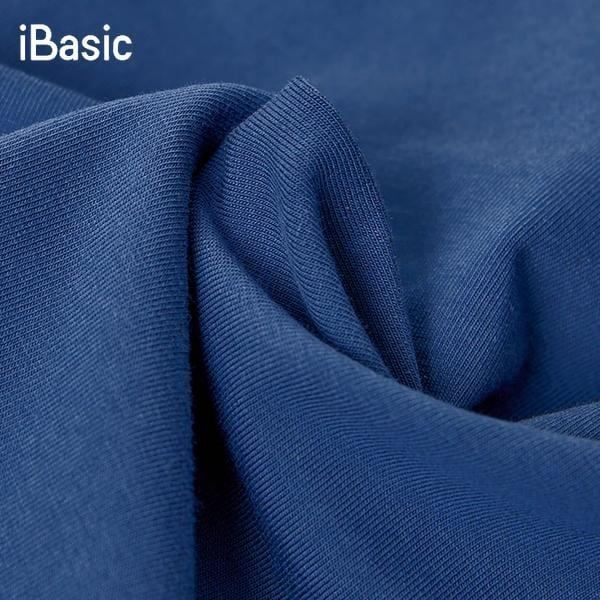
Here is the practical difference. A cotton tee soaked at 11pm is still slightly damp at 3am, and damp fabric pulls heat off the body as it evaporates. That is why your son can feel cold in a 28°C room.
Weight matters as much as fibre. A thin 140gsm cotton jersey breathes far better than a thick 220gsm cotton fleece, even though both are "100% cotton" on the label.
Look for the knit, not just the fibre name. Single jersey and interlock breathe; brushed and fleeced surfaces trap air deliberately, which is useful in December and miserable in June.
| Fabric | Breathability | Sweat handling | Feel after 20 washes | Best season | Best for |
| Cotton (thin jersey) | High | Absorbs, dries slowly | Softens, may pill slightly | All year | Everyday sets, ages 2-14 |
| Modal | High | Wicks, dries fast | Stays smooth | Hot season | Boys who sweat heavily |
| Bamboo viscose | Very high | Wicks, dries fast | Very soft, needs gentle wash | Hot and humid nights | Sensitive or itchy skin |
| Tole (cotton blend) | Very high | Absorbs, very airy | Loosens slightly | Peak summer | Fan-only rooms, no A/C |
1.2. How does an air-conditioned room change what your son should wear to bed?
An air-conditioned room flips the usual advice. At 26°C with the compressor cycling, the air is dry and the temperature drops through the night, so a short-sleeve set that felt right at bedtime can leave your son cold by 3am. Long sleeve in thin fabric beats short sleeve in thick fabric.
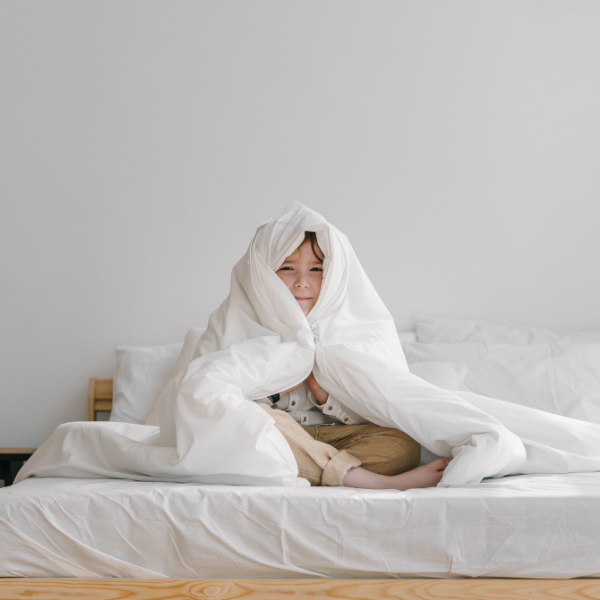
The rule iBasic gives moms is simple: in A/C, add coverage, not thickness. A long-sleeve top in thin cotton or modal keeps his shoulders and arms warm without trapping heat around his core.
If the room runs on a fan instead, reverse it. Short sleeve, short pants, and the airiest fabric you own, because the air is humid and evaporation is doing all the cooling work.
One detail moms often miss: air conditioning dries the skin.
Boys with eczema or heat rash usually do better in bamboo or modal in an A/C room, because those fabrics stay smooth rather than getting crisp after repeated washing.
2. Which boys sleepwear fits each age stage?
2.1. Ages 2 to 5: what matters when he is still potty training?
At this age the priority is a waistband he can pull down alone in five seconds, in the dark, half asleep. Everything else is secondary.
An elastic waist with no buttons, no drawstring knot, and no snug fit around the hips is what prevents accidents.
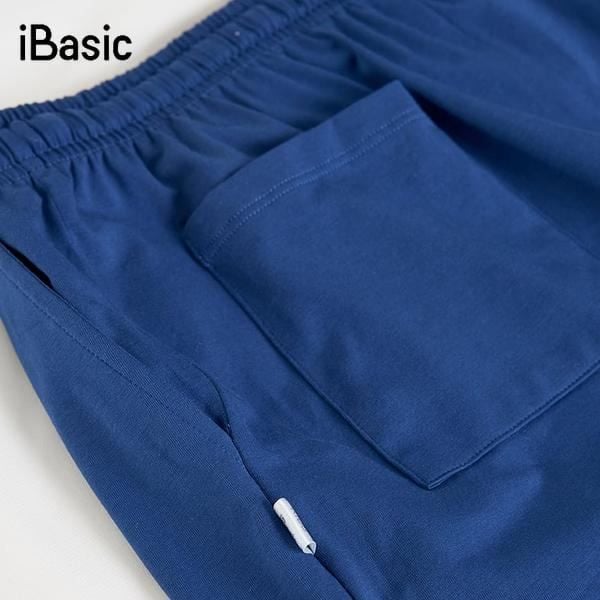
Two-piece sets beat onesies from about age three, for exactly this reason.
Skip anything with a rigid printed panel across the belly, because it stiffens after washing and the toddler feels it when he curls up.
Keep the top loose at the neck. A tight neckline is the number one reason a three-year-old fights getting dressed for bed.
2.2. Ages 6 to 10: what does an active, restless sleeper need?
A boy in this band moves constantly in his sleep, so the set has to move with him and stay put.
Flat seams, a waistband that does not roll, and a top long enough to stay tucked when he rolls over are what separate a set he sleeps in from one he wakes up tangled in.
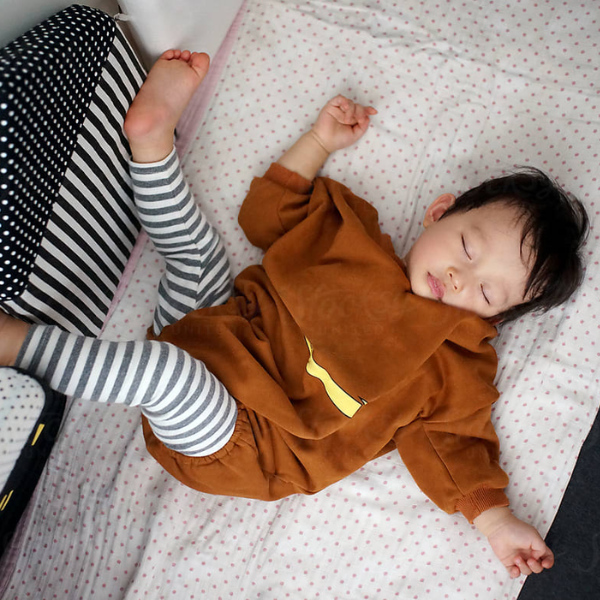
This is also the sweatiest age band. He runs all afternoon, goes to bed with residual body heat, and peaks around 45 minutes after lights out.
Choose the airiest fabric you can find for this stage. Thin cotton or tole for a fan room, modal if he is a heavy sweater.
Check the crotch seam on the shorts. A single flat seam is comfortable; a bulky four-way seam junction is what causes the chafing he cannot explain to you.
2.3. Ages 11 to 14: what changes when he wants privacy and dresses himself?
From around 11 the deciding factor stops being comfort alone and becomes whether he feels comfortable being seen in it. He may answer the door, share a room, or have friends over, so coverage and a grown-up look matter as much as fabric.
Drop the character prints. Solid colours, thin stripes, and muted navy, grey, or olive are what boys this age actually keep wearing.
Avoid clingy fabric. Puberty makes boys self-conscious about their bodies, and a set that clings after a sweaty night gets rejected quietly.
| Age band | Top priority | Recommended cut | Fabric | Sets to own |
| 2-5 | Self-dressing, potty training | Loose two-piece, soft elastic waist | Thin cotton | 5-6 |
| 6-10 | Movement, sweat, no chafing | Short sleeve + shorts, flat seams | Cotton or modal | 4-5 |
| 11-14 | Coverage, privacy, mature look | Relaxed fit, solid colours | Cotton or bamboo | 4-5 |
3. Five mistakes moms make when buying boys sleepwear
3.1. Sizing up too far so it lasts longer
One size up is fine. Two sizes up creates a top that slides off the shoulder and shorts that need constant pulling up, and a boy who fights the set every night will simply stop wearing it.
3.2. Choosing thick fleecy fabric for a cold-blooded sleeper
A boy who says he is cold usually needs a warmer blanket, not thicker sleepwear.
Thick fabric against the skin traps sweat, and trapped sweat is what makes him cold two hours later. Adjust the bedding layer, keep the sleepwear thin.
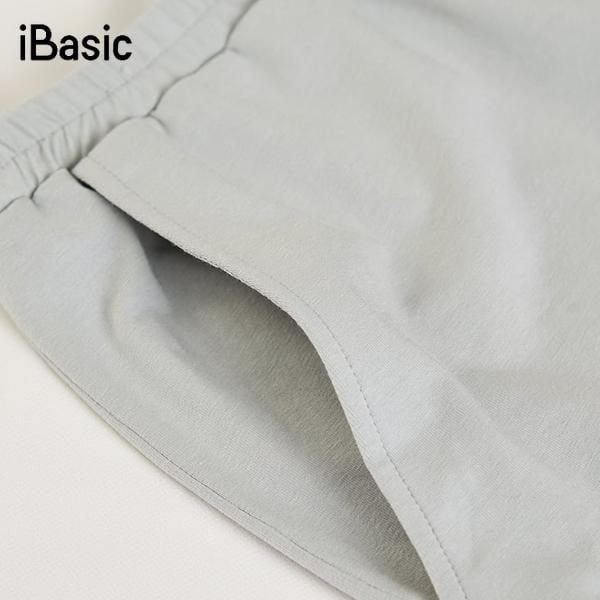
3.3. Ignoring the waistband and the neckline
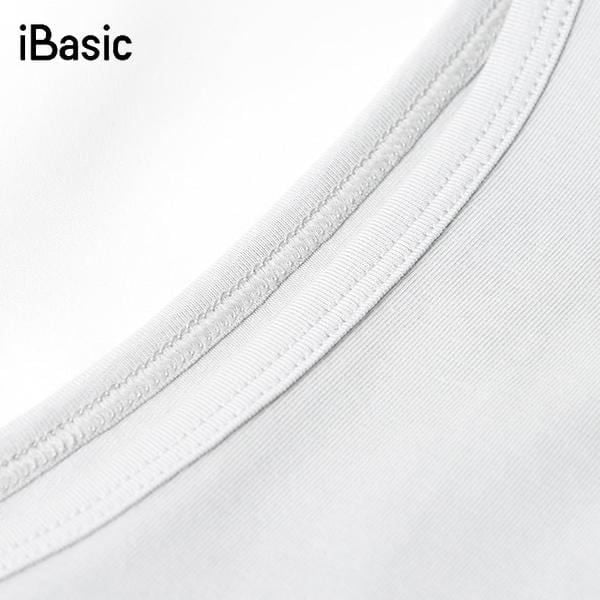
These two contact points cause more complaints than the whole rest of the garment. A waistband that digs in leaves a red line by morning, and a stiff neckline chafes exactly where a boy will scratch himself raw. Feel both between your fingers before you buy.
3.4. Buying only long sleeve or only short sleeve
Vietnamese households switch between fan and air conditioning on the same night. A drawer with only one type forces the wrong choice half the time. Split the sets: roughly two thirds short sleeve, one third long sleeve.
3.5. Buying six of the same set before washing one
Fabric quality only reveals itself after the third wash. Buy one, wash it three times, then check for pilling, shrinkage at the hem, and a waistband that has lost its snap. Only then buy the rest.
4. How do you care for boys sleepwear so it stays soft?
Sleepwear stays soft when you wash it cool, wash it inside out, and keep fabric softener away from bamboo and modal.
Most of the roughness moms blame on cheap fabric is actually wash damage: hot water, over-drying in direct sun, and softener residue clogging the fibres.
Care is also a hygiene question, not only a comfort one. Sleepwear sits against the skin for eight hours a night and collects sweat, skin cells and dust.
4.1. How often should sleepwear be washed and replaced?
Wash after two nights in cool weather and every night in hot weather or whenever he has sweated through it. Replace a set when the waistband no longer springs back, when the fabric has gone thin and see-through at the seat, or when he has clearly outgrown it, which is usually every 8-12 months.
Owning 4-6 sets makes this sustainable. With fewer, you are washing constantly and each set wears out faster from the wash cycles rather than from wear.
Keep two sets aside as the good ones for when he stays at a relative's house or goes on a trip.
4.2. What ruins softness fastest, and how do you avoid it?
Heat, softener, and sunlight, roughly in that order. Wash at 30°C or cooler, turn everything inside out, skip fabric softener entirely on bamboo and modal, and dry in shade rather than harsh midday sun. Those four habits are worth more than paying double for the fabric.
- Wash at 30°C or below, on a gentle cycle.
- Turn sets inside out to protect prints and the surface of the knit.
- Skip fabric softener on bamboo and modal; it coats the fibres and kills their wicking.
- Dry in shade, never on a hot rack, and never wring the waistband.
- Rotate all your sets evenly instead of always reaching for the top of the pile.
More for you:
Questions moms often ask:
1. What size sleepwear should I buy for my 8-year-old?
Buy to his current height, then go one size up if he is between sizes or growing fast. An average 8-year-old sits around 125-130cm, which is usually a size 8 or 9 in Vietnamese sizing.
2. Should boys wear underwear under pajamas?
Yes, in most cases. Underwear absorbs sweat and discharge directly, keeps the sleepwear cleaner, and is more hygienic overall.
3. Is short sleeve or long sleeve better in an air-conditioned room?
Long sleeve in thin fabric is usually better. The room temperature keeps falling through the night, and thin long sleeves give coverage without trapping heat.
4. How many sleepwear sets does a boy need?
Four to six is the practical number. That covers the laundry cycle in hot weather when he changes nightly, keeps two sets in reasonable condition for travel, and spreads the wear so no single set wears out early.
5. Why does my son wake up sweaty even in cool weather?
Usually the fabric, not the temperature. Thick or synthetic-blend sleepwear traps the heat his body generates during deep sleep, and once sweat is held against the skin it cannot evaporate.
6. When should I stop buying character-print sleepwear for him?
Most boys start rejecting character prints between 9 and 11, often without saying so directly. Watch for him picking the plain set repeatedly, then switch to solid colours or subtle stripes.
A message for moms:
The right boys sleepwear comes down to breathable fabric, a fit that lets him move and dress himself, and a set that matches the age stage he is in right now. Get those three right and everything else, including the print, is just preference.
If you want a starting point, have a look at the iBasic boys' loungewear range: cotton USA, antibacterial finish, flat seams and soft waistbands, made for the kind of hot nights our children actually sleep through.